Are there really shortcuts for the theory test?
There's no way round learning the rules, but road signs and markings follow a few simple patterns. Once you know them, you can often work out what a sign means before you've read the details. Everything below comes from the Highway Code and the Know your traffic signs book, which the theory test questions are based on.
To pass, you need 43 out of 50 in the multiple-choice part and 44 out of 75 in hazard perception, and you have to pass both parts, according to GOV.UK.
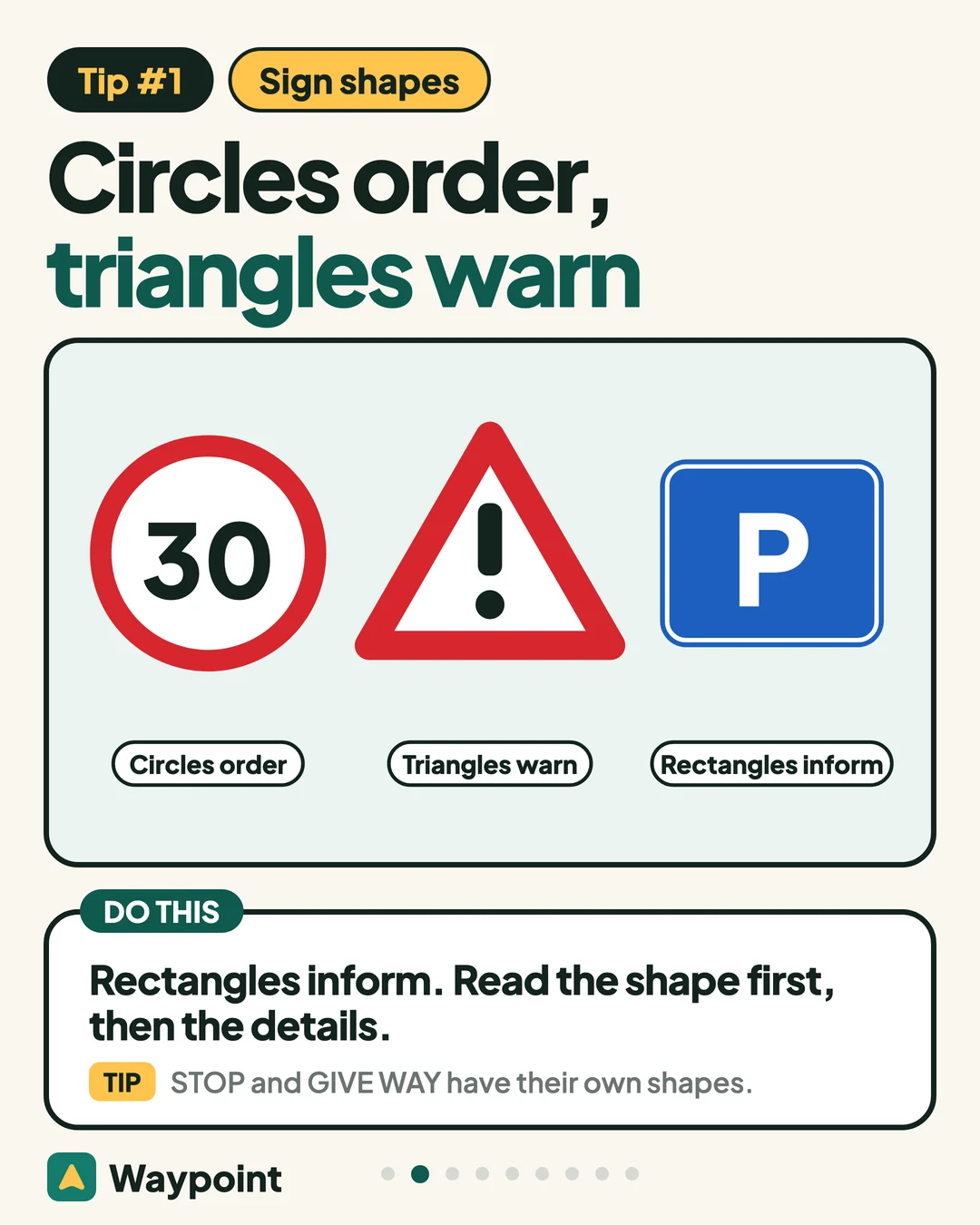
1. Circles give orders, triangles warn, rectangles inform
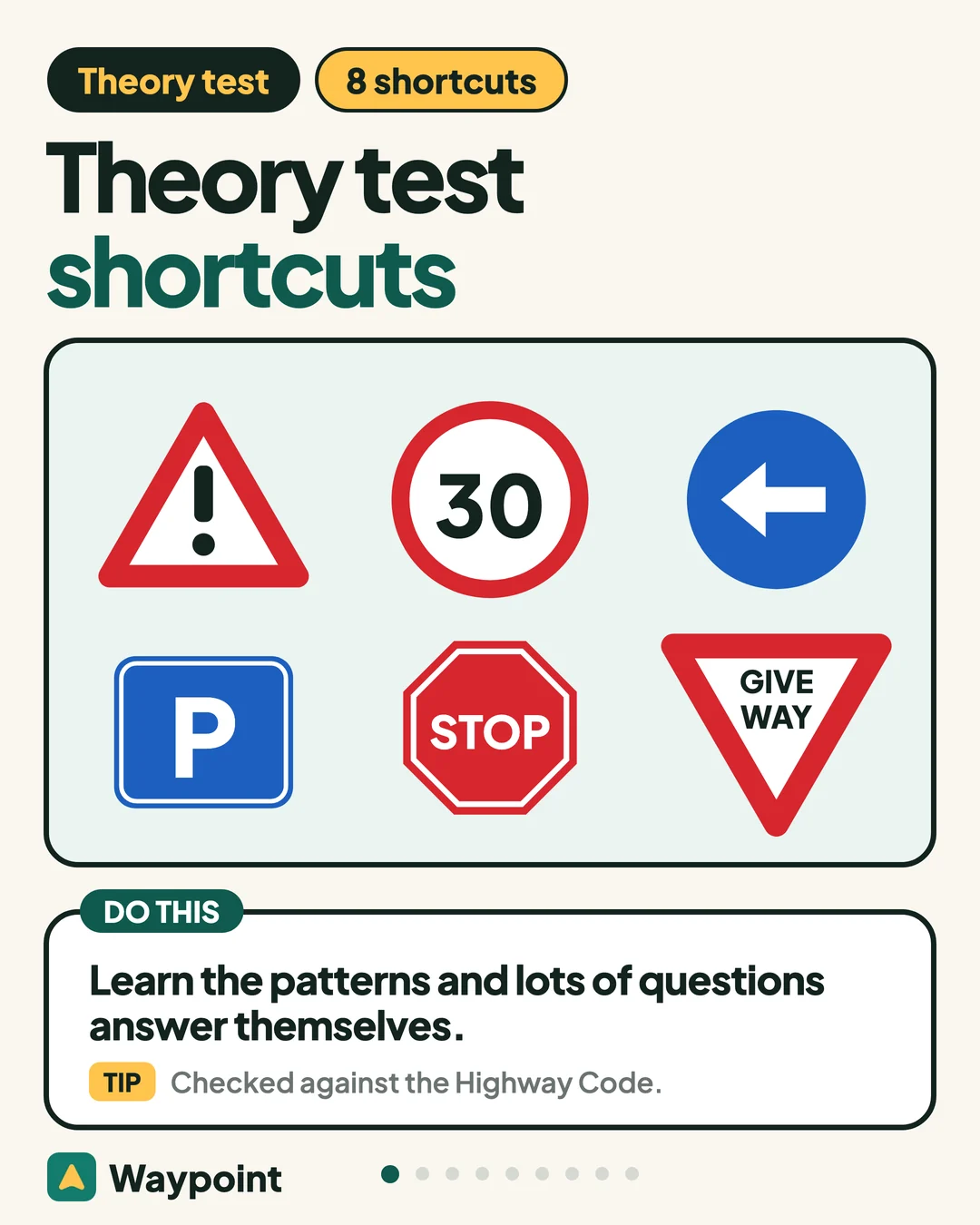
That line comes straight from Know your traffic signs. The shape tells you what kind of sign you're looking at: a circle is an order, a triangle is a warning and a rectangle is information.
There are a few exceptions, used to make certain signs stand out. STOP is an eight-sided octagon and GIVE WAY is an upside-down triangle, so you'll recognise them straight away.
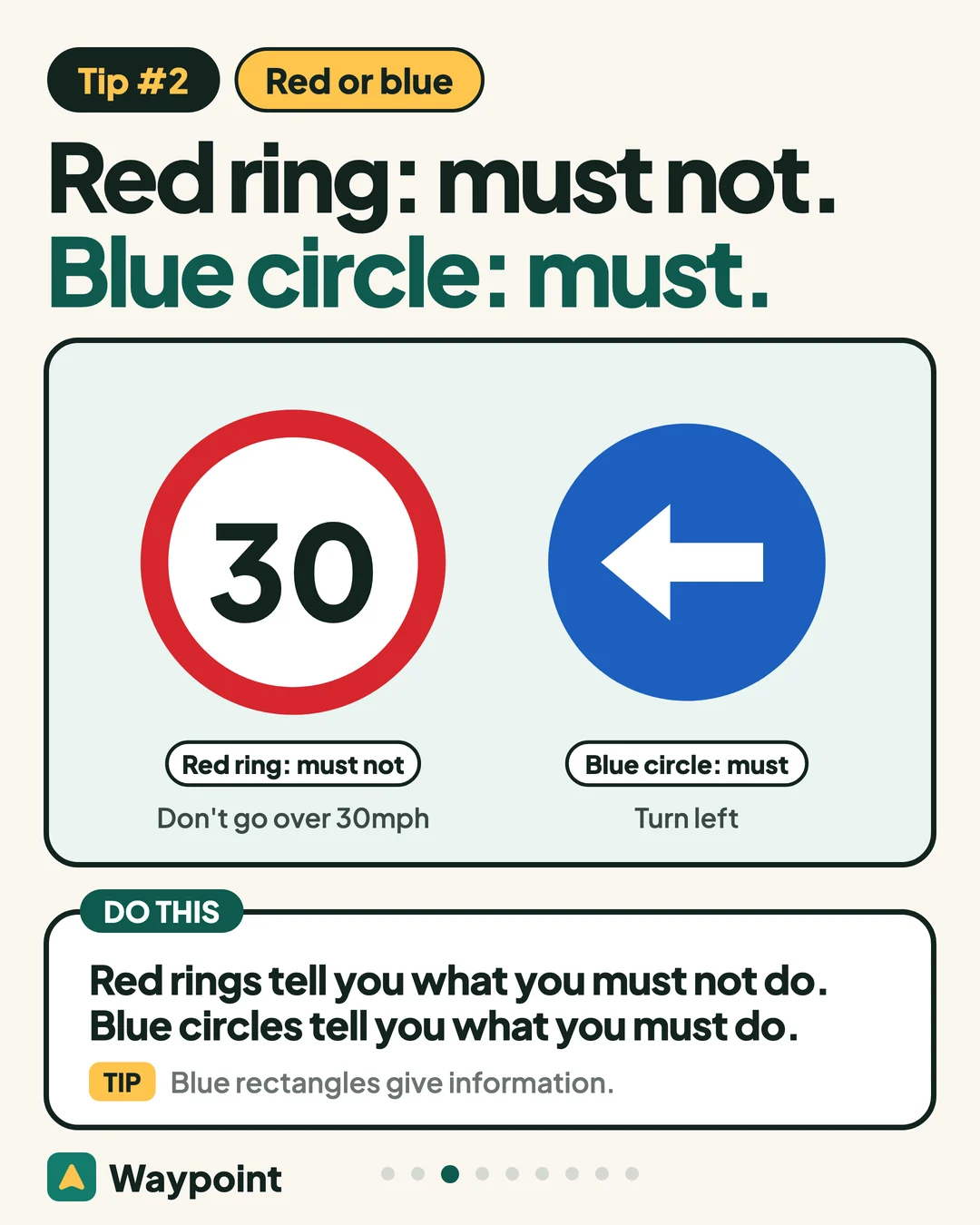
2. A red ring means "must not", a blue circle means "must"
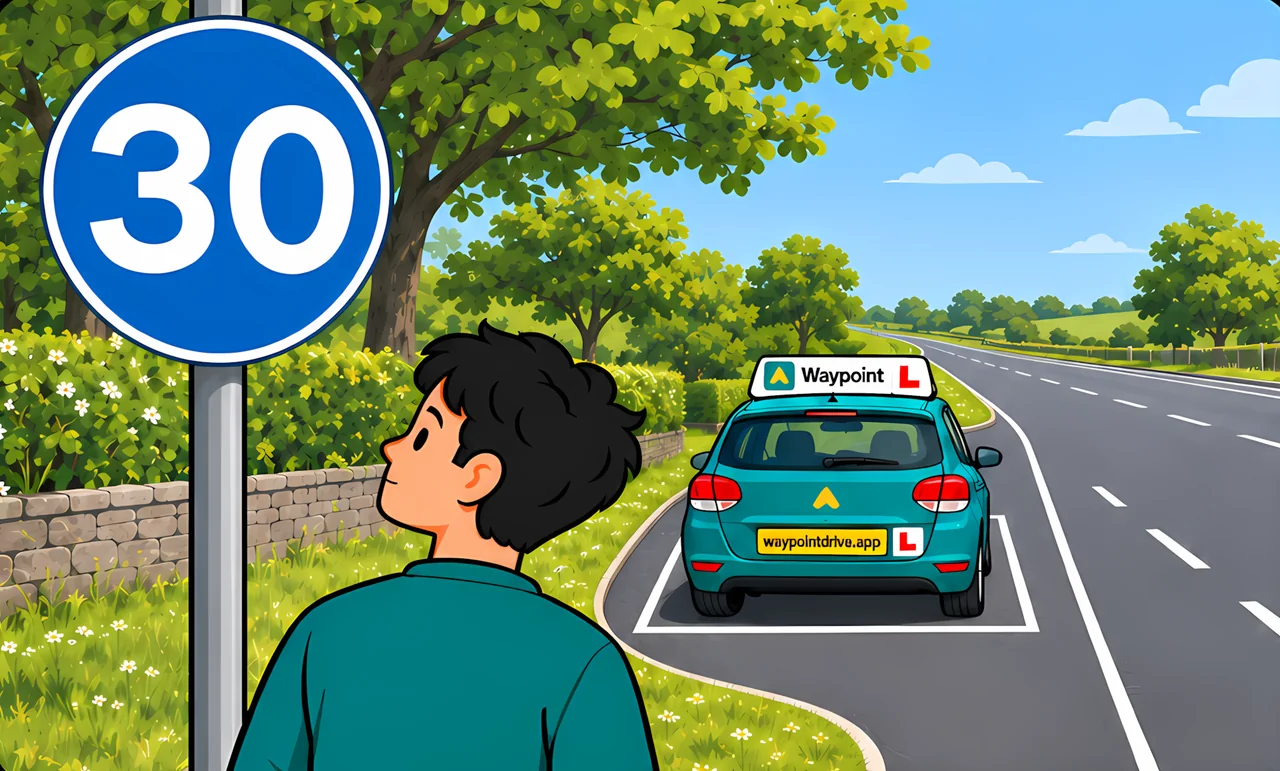
Red rings or circles tell you what you must not do, like going over 30mph. Blue circles generally tell you what you must do, like turn left, or show a route that only certain traffic can use, such as buses and cycles.
Don't mix them up with blue rectangles. Those give information, except on motorways, where blue is used for direction signs.
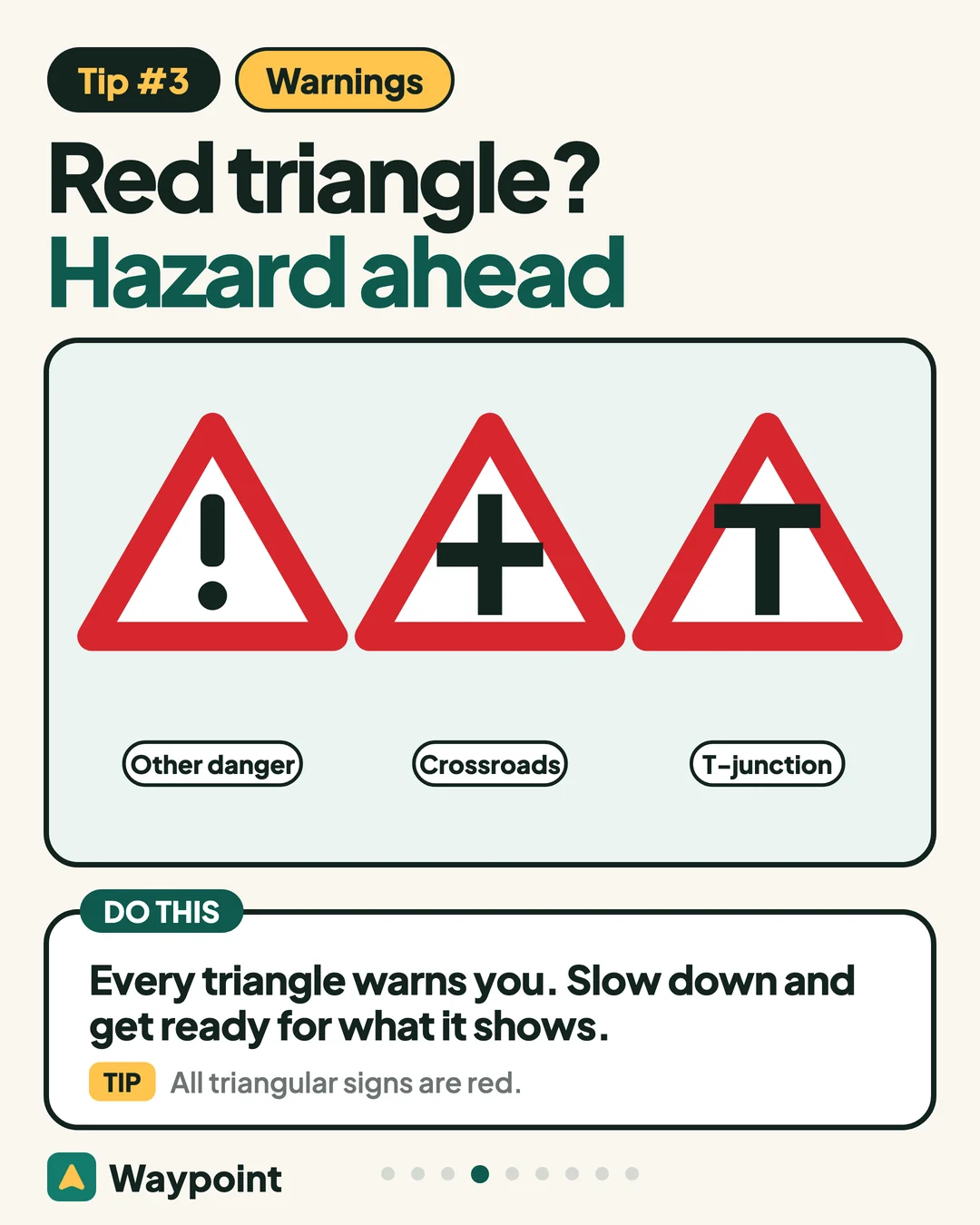
3. A red triangle means a hazard ahead
All triangular signs are red, and they warn you about something coming up, like a crossroads, a T-junction, a bend or a roundabout. The symbol inside shows you what the hazard is. When you see one, slow down and get ready for it.
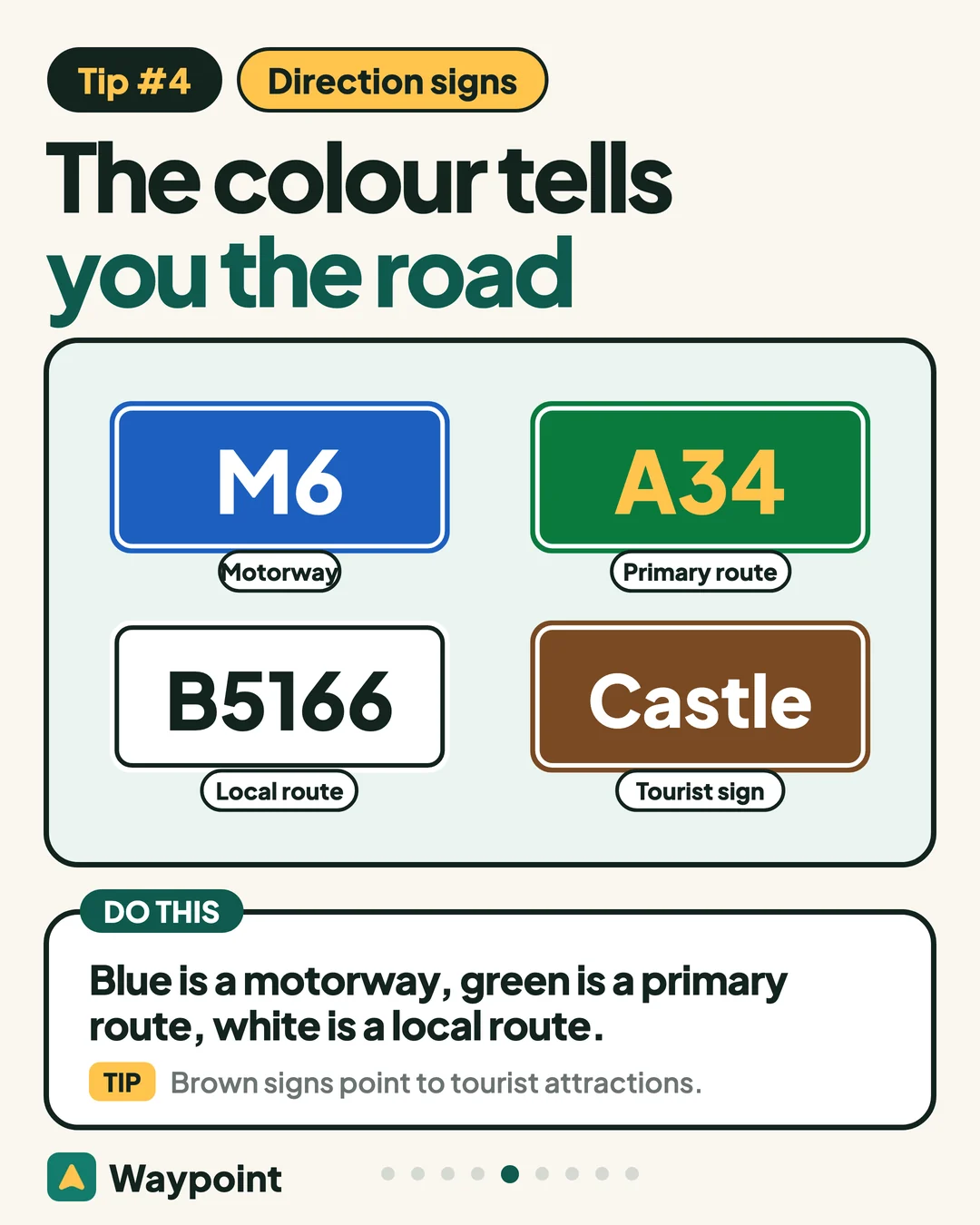
4. The colour of a direction sign tells you the type of road
- Blue: motorways
- Green: primary routes, the main A roads
- White: local or non-primary routes
- Brown: tourist attractions
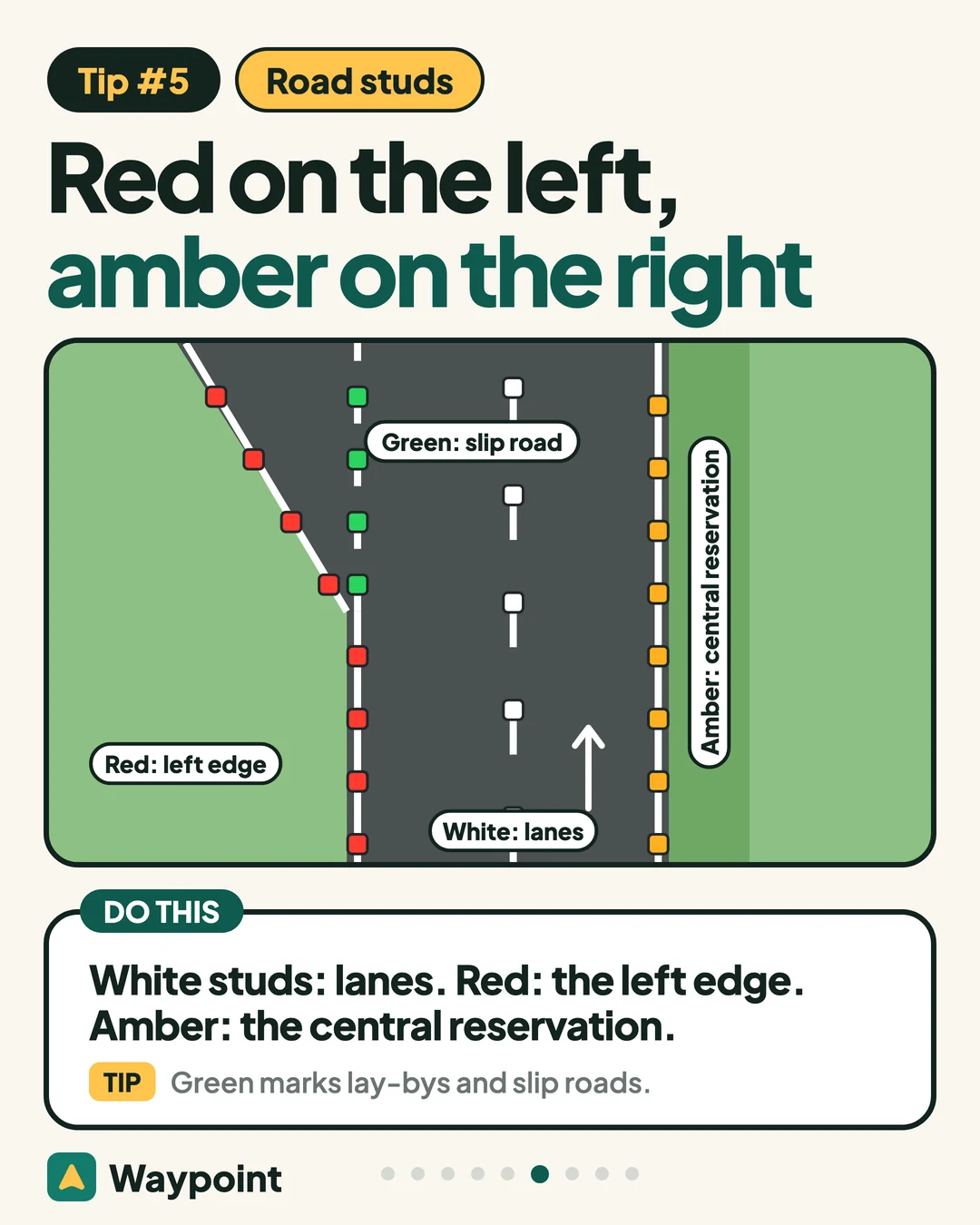
5. Road studs: red on the left, amber on the right
Reflective road studs (often called cat's eyes) help you see the road at night. Rule 132 of the Highway Code gives the colours:
- White marks the lanes or the middle of the road.
- Red marks the left edge of the road.
- Amber marks the central reservation of a dual carriageway or motorway.
- Green marks the edge of the main carriageway at lay-bys and slip roads.
- Green/yellow shows a temporary lane layout, for example at road works.
On a dual carriageway at night, you'll see red on your left and amber on your right.
6. Red and amber together still means stop
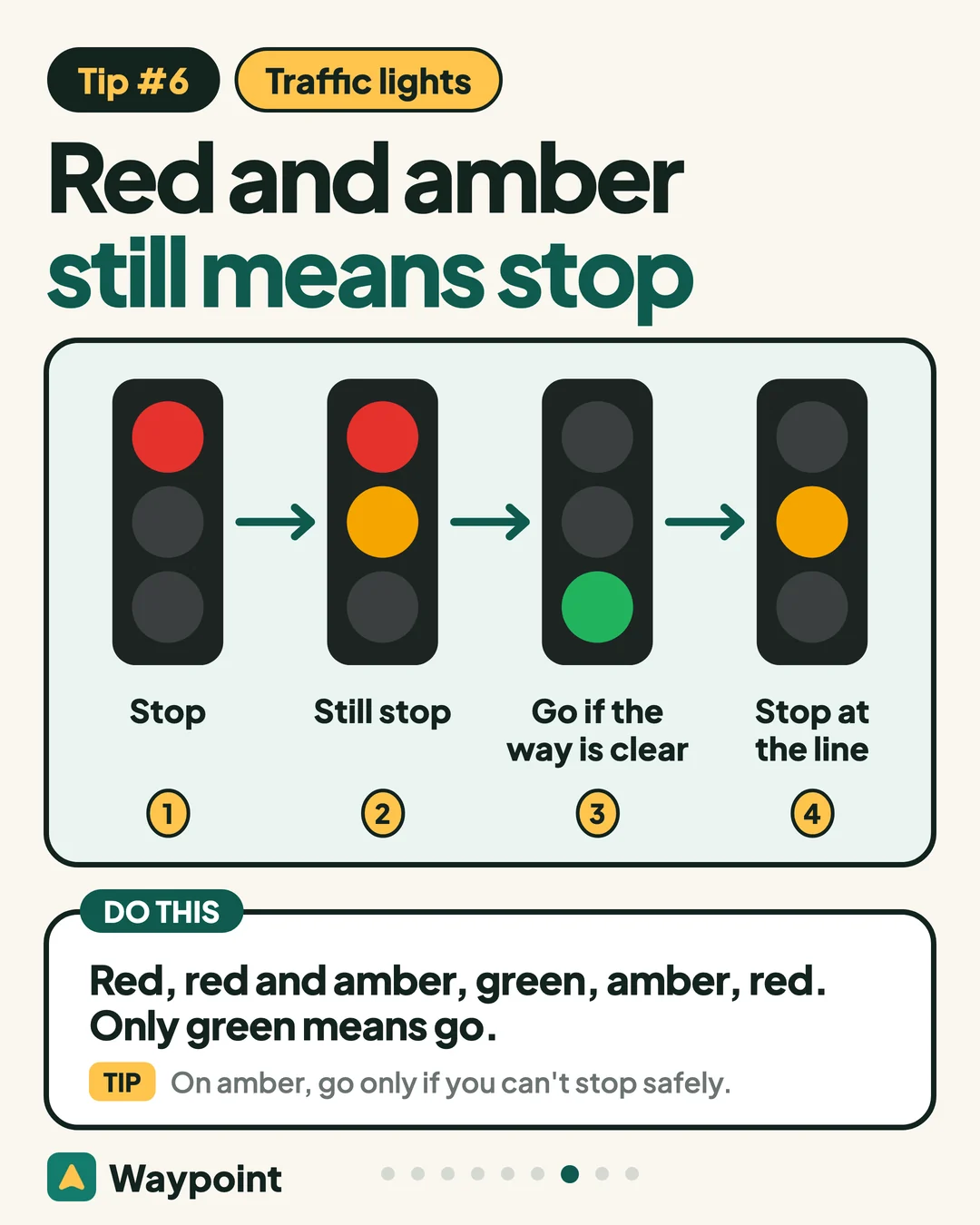
UK traffic lights go red, red and amber, green, amber, then red again. According to the Highway Code:
- Red: stop and wait behind the stop line.
- Red and amber: also means stop. Don't go until green shows.
- Green: you may go if the way is clear. Take care when turning and give way to people crossing.
- Amber: stop at the stop line. Only go on if you'd already crossed the line when it changed, or you're so close that pulling up might cause a crash.
7. Longer lines and shorter gaps mean a hazard ahead
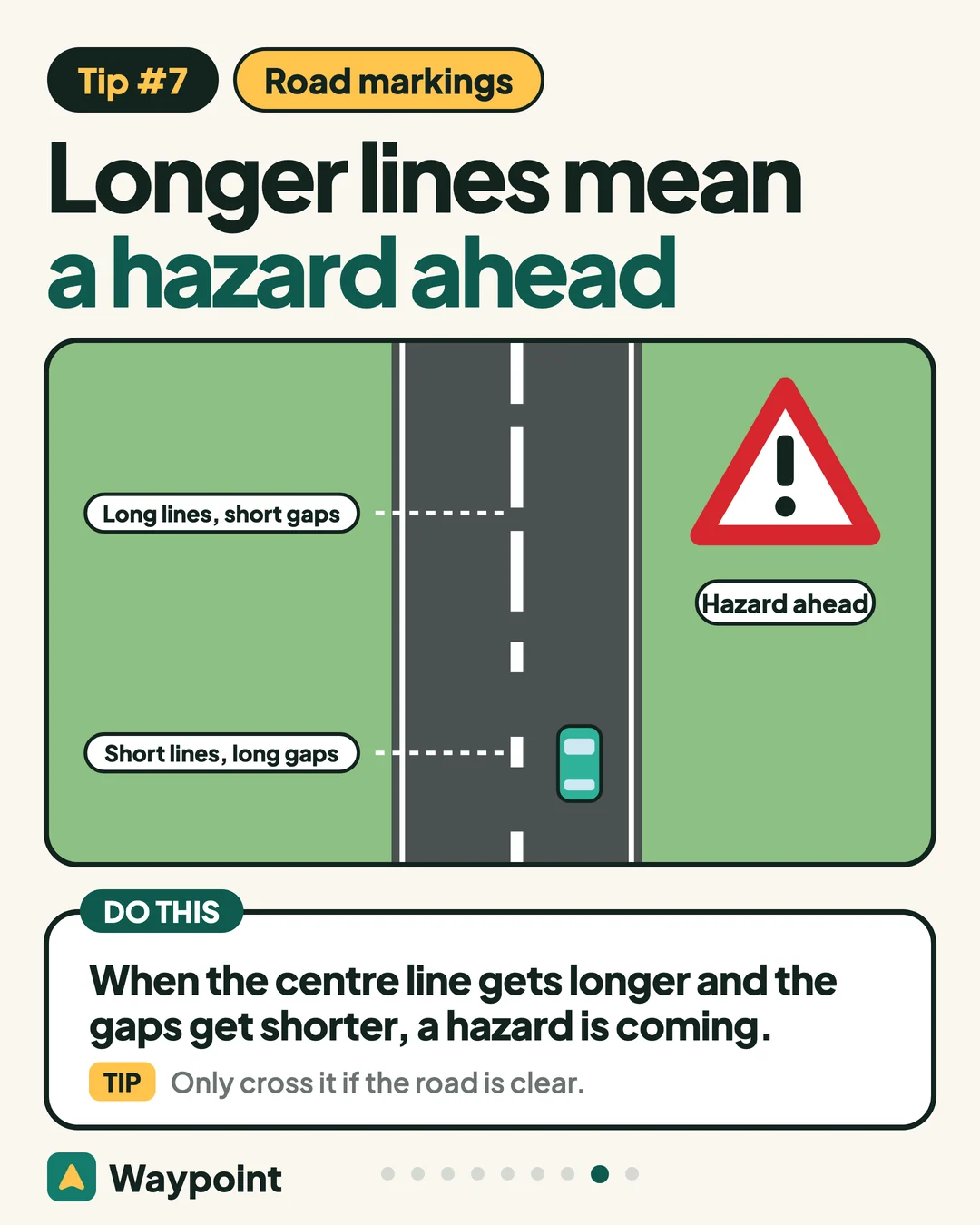
A broken white line marks the middle of the road. When the lines get longer and the gaps get shorter, there's a hazard ahead. Don't cross it unless you can see the road is clear and you want to overtake or turn off.
Double white lines are stricter. If the line nearest you is solid, you mustn't cross or straddle it, apart from a few exceptions in the Highway Code, like passing a stationary vehicle.
8. At roundabouts, give way to traffic from your right
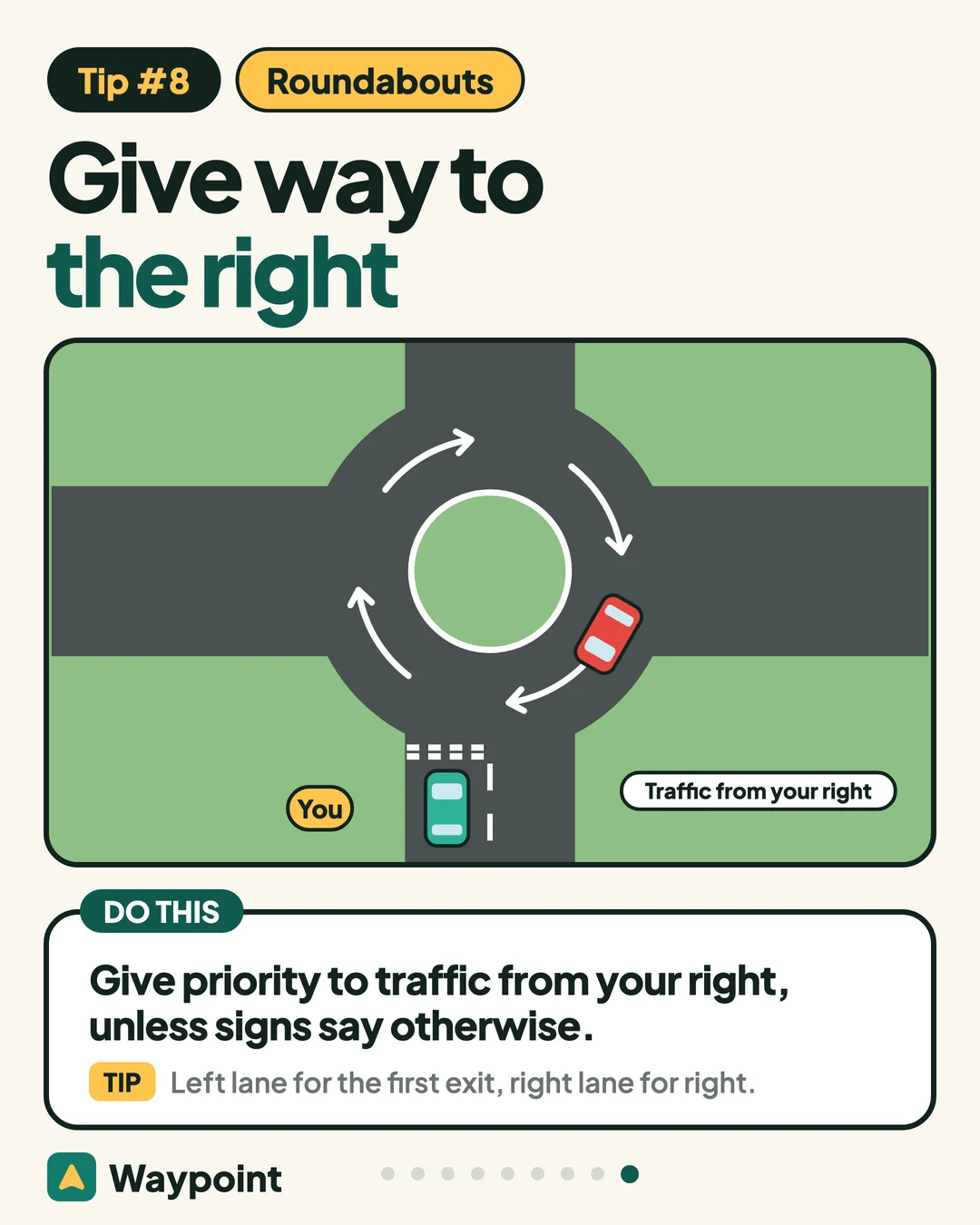
At a roundabout, give priority to traffic coming from your right, unless signs, road markings or traffic lights tell you otherwise (rule 185).
For lanes, rule 186 says:
- First exit (left): signal left and approach in the left-hand lane.
- Turning right or going full circle: signal right and approach in the right-hand lane, then signal left after you pass the exit before the one you want.
- Exits in between: pick the right lane as you approach.
How do you make these stick?
Test yourself little and often. Say what each sign means when you're out as a passenger, and try the road signs quiz to see which ones you still mix up. For more ideas, read how to revise for your theory test, and learn the national speed limits with our speed limit guide.
How does Waypoint help you revise?
Waypoint asks you a few theory questions when you open an app you've chosen to block, like TikTok or Instagram. Answer them and you're back in, so a little revision happens every time you reach for your phone.
It has all 758 DVSA revision questions across 14 topics, used under licence, and the questions you get wrong come back until you've cleared them. Get Waypoint and start with a 3-day trial.