How much extra space do you need on a wet road?
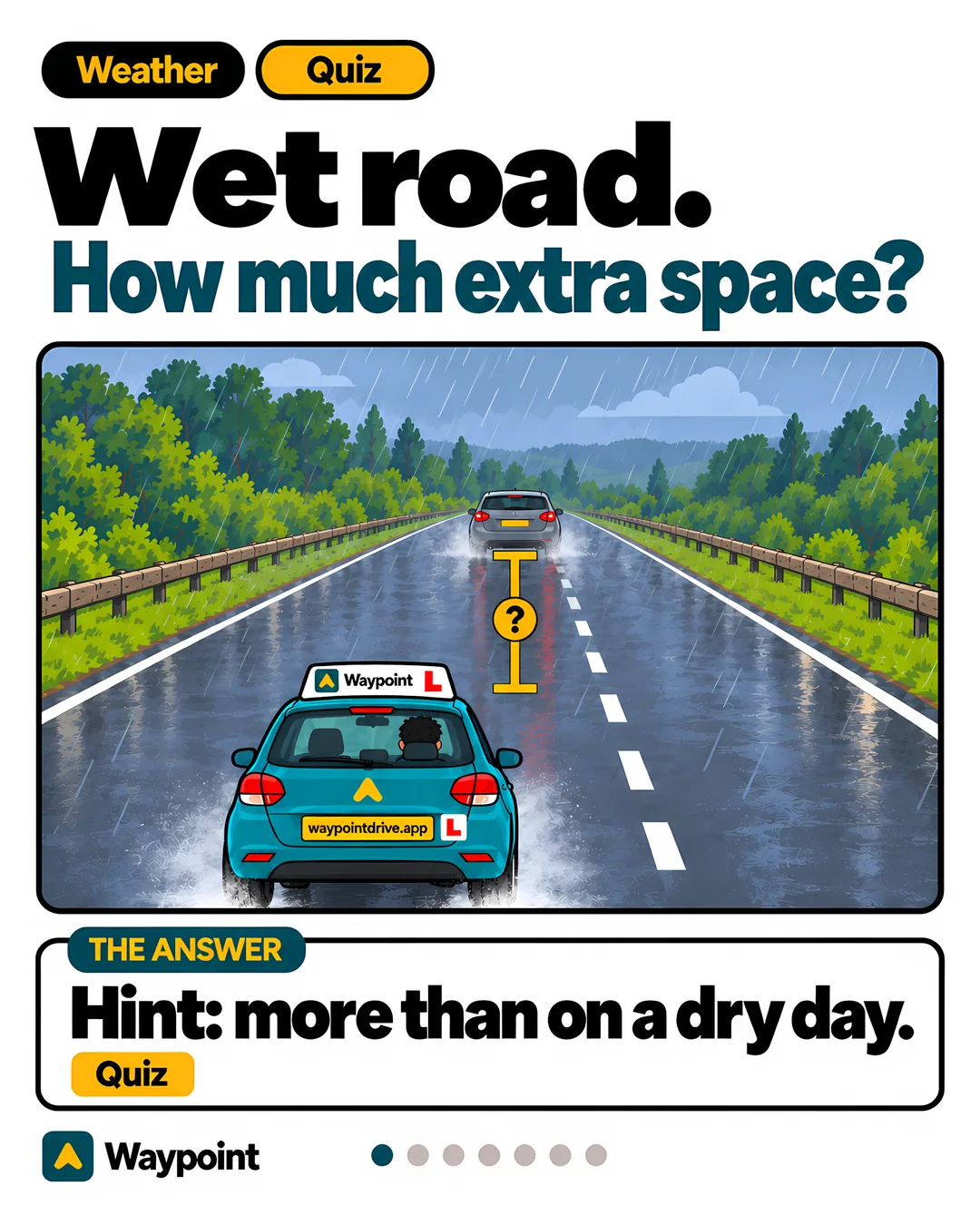
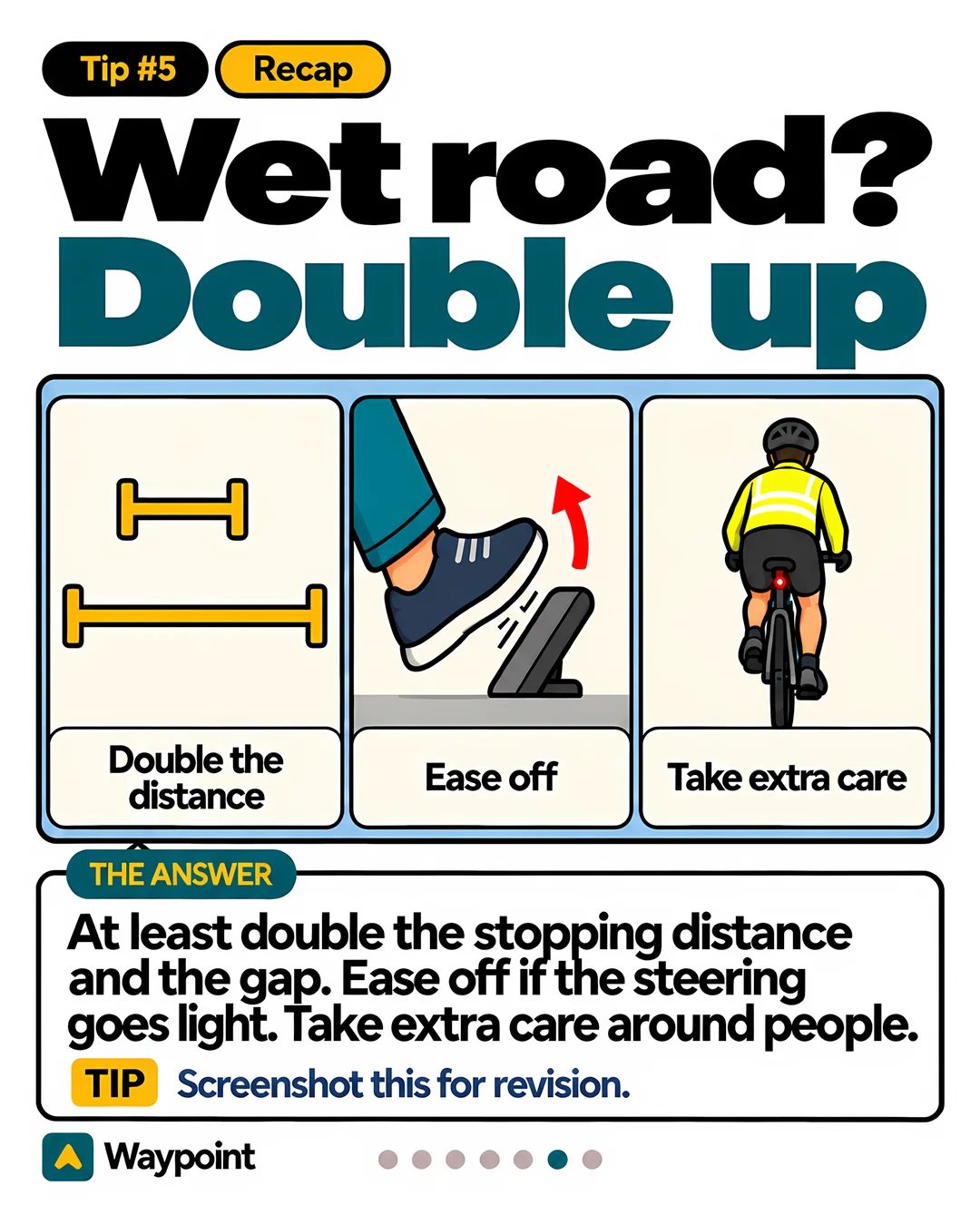
A lot more than on a dry one. Rain cuts the grip between your tyres and the road, so everything takes longer: slowing down, stopping and steering. The Highway Code is clear about it, and the idea is simple to remember: on a wet road, double up.
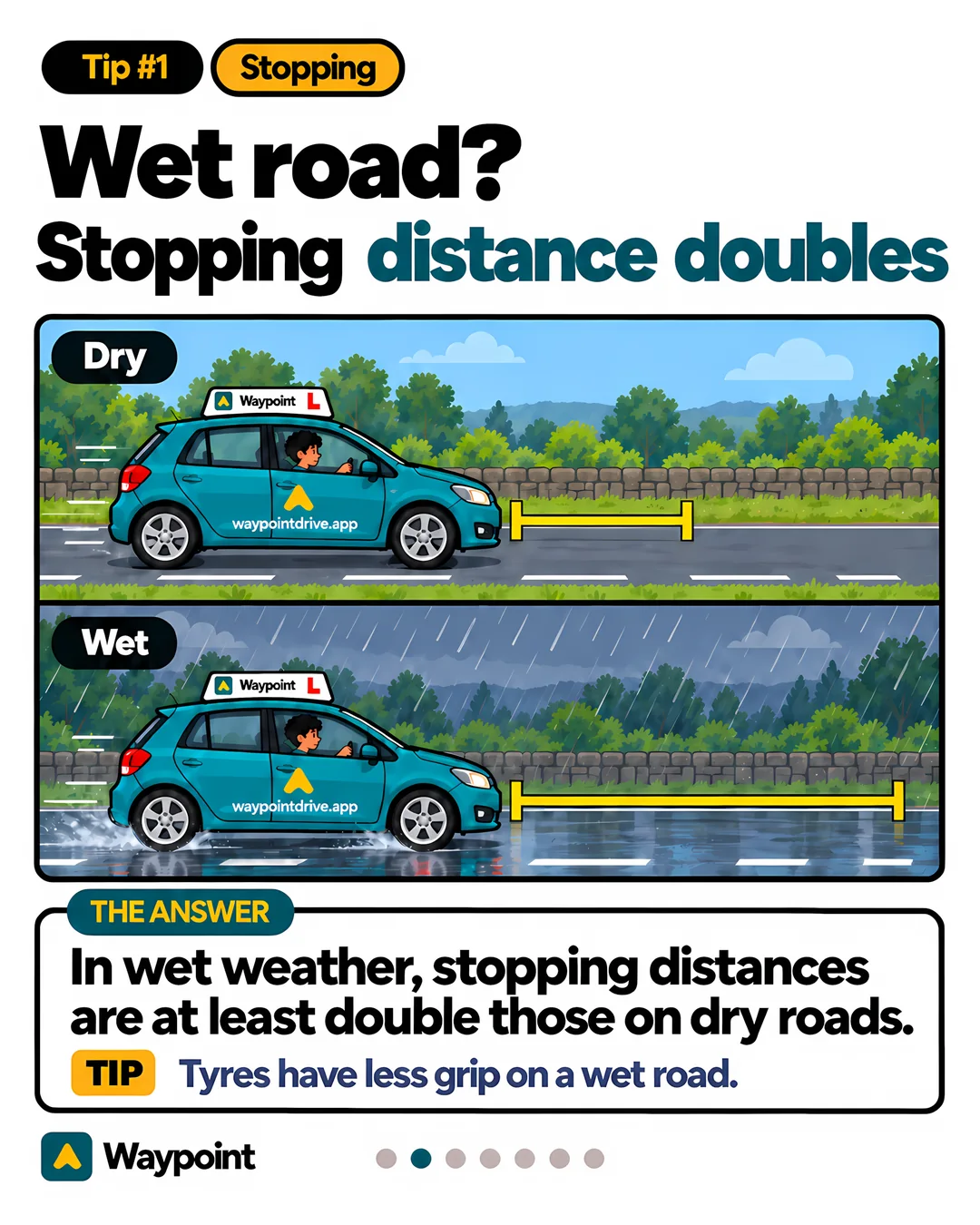
1. Stopping distances are at least double
Rule 227 of the Highway Code says that in wet weather, stopping distances will be at least double those you need on dry roads. That's because your tyres have less grip on a wet surface. The code doesn't give you a single number for this, because the distance depends on your speed, your car and the road, so the safest habit is to slow down earlier and leave yourself more room than feels necessary.
2. Double your two-second gap
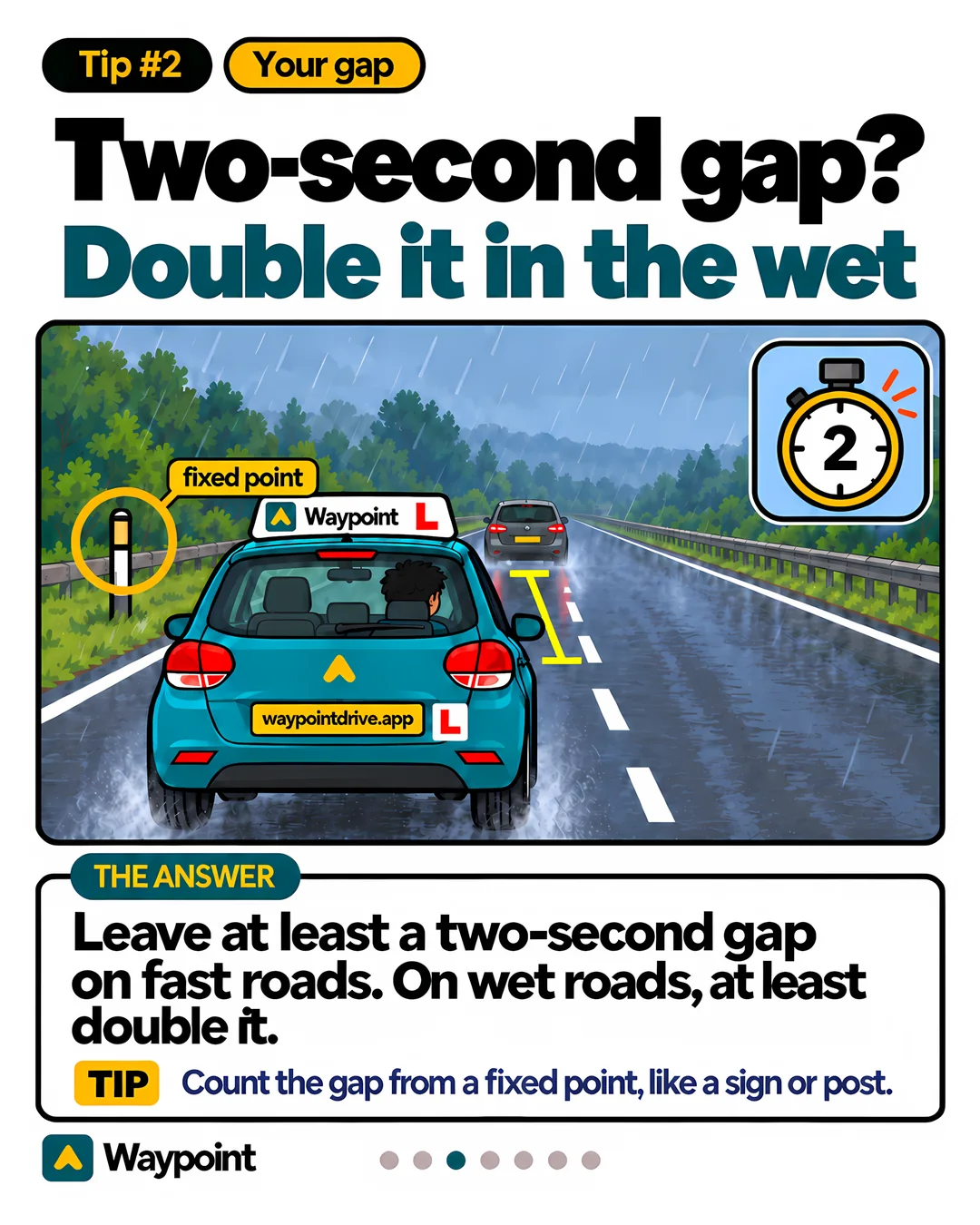
On fast roads, rule 126 tells you to leave at least a two-second gap between you and the vehicle in front. It also says the gap should be at least doubled on wet roads. In practice that means at least four seconds.
To count it, pick a fixed point at the side of the road, like a sign or a post. When the car in front passes it, start counting. If you pass the same point before you've counted to four, drop back.
3. If the steering feels light, ease off
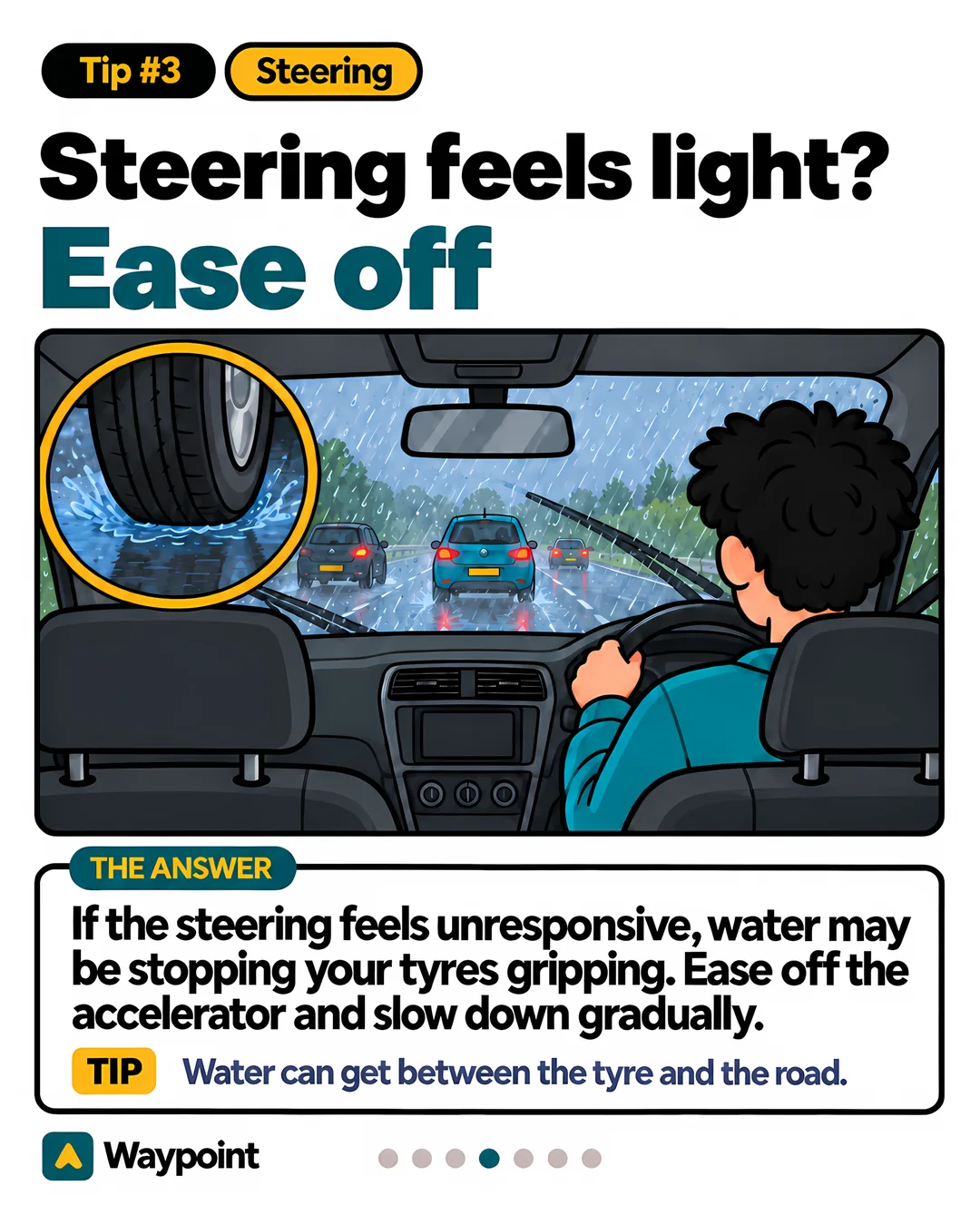
Sometimes the steering suddenly feels unresponsive. The Highway Code says this probably means water is preventing your tyres gripping the road. The advice is to ease off the accelerator and slow down gradually.
Don't brake hard or swerve. Sudden moves are what a tyre with little grip can't cope with. Lift off smoothly and let the car slow down until you feel the steering come back.
4. Rain and spray make it harder to see and be seen
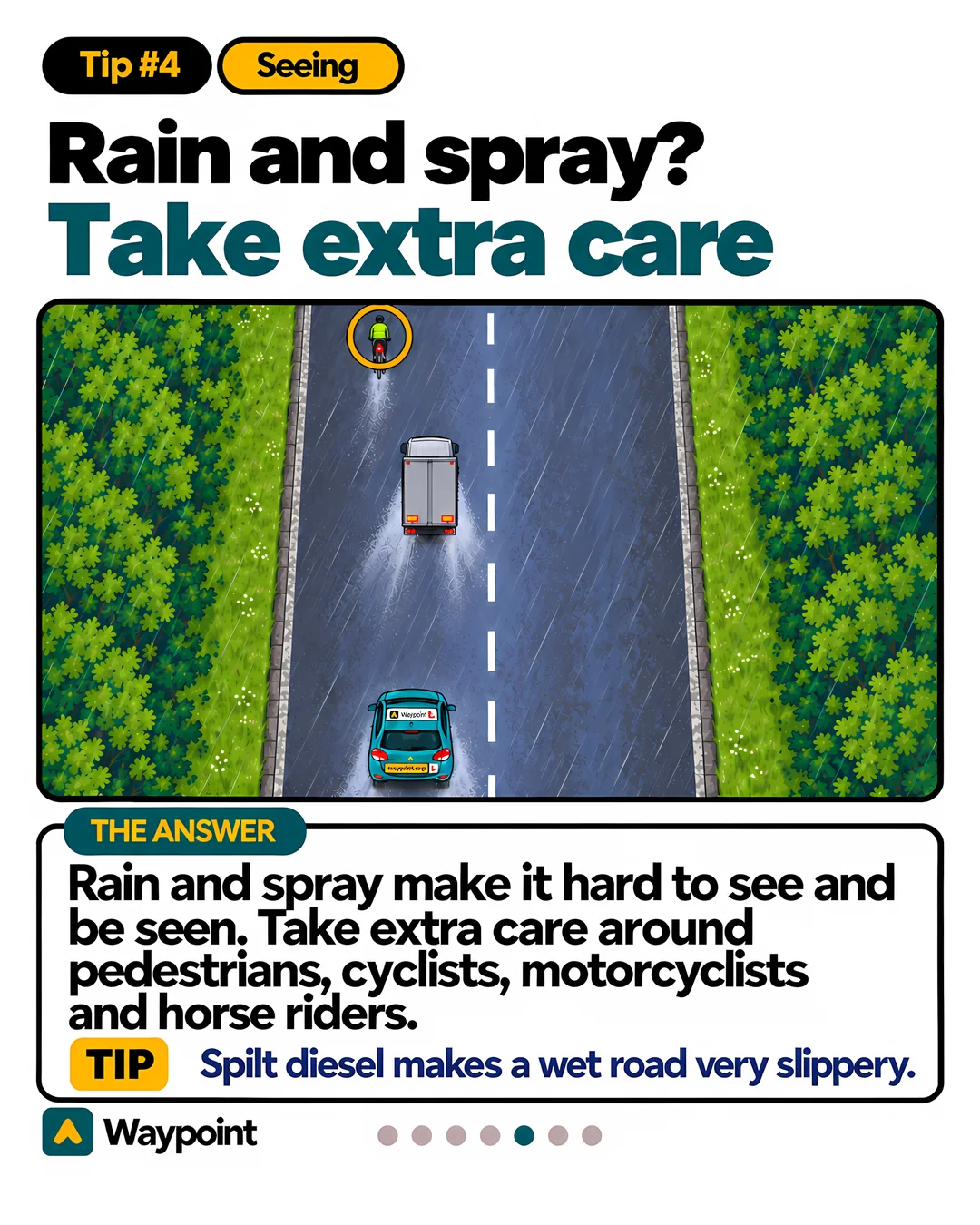
Rule 227 also warns that rain and spray from other vehicles can make it difficult to see and be seen. Spray from lorries and buses can hide a whole lane for a moment.
Take extra care around pedestrians, cyclists, motorcyclists and horse riders. They're harder to spot in the rain, and spray from your car can hit them as you pass. Give them more room and pass slowly.
If visibility is seriously reduced, rule 226 says you must use your headlights. The code generally treats that as being unable to see for more than about 100 metres.
5. Watch out for spilt diesel
Rule 227 also says to be aware of spilt diesel, which makes the road surface very slippery. It can be hard to spot on a wet road. If the road suddenly feels much more slippery than it should, slow down gently and avoid sudden steering or braking.
What about the speed limit?
The speed limit is the most you're allowed to do, not a speed that's safe in every condition. Rule 125 says driving too fast for the road and traffic conditions is dangerous, and it lists adverse weather as one of the reasons to reduce your speed. On a wet road, driving below the limit is often the right call.
Does this come up in the theory test?
Yes. Stopping distances, the two-second rule and driving in bad weather are all part of the theory test, and the answers come from the Highway Code. The three numbers to remember are these:
- Stopping distance in the wet: at least double.
- Two-second gap in the wet: at least double.
- Icy roads: the gap can need to be up to ten times greater (rule 126).
How does Waypoint help you revise?
Waypoint asks you a few theory questions when you open an app you've chosen to block, like TikTok or Instagram. Answer them and you're back in, so a little revision happens every time you reach for your phone.
It has all 758 DVSA revision questions across 14 topics, used under licence, and the questions you get wrong come back until you've cleared them. Get Waypoint and start with a 3-day trial.