What do yellow lines mean?
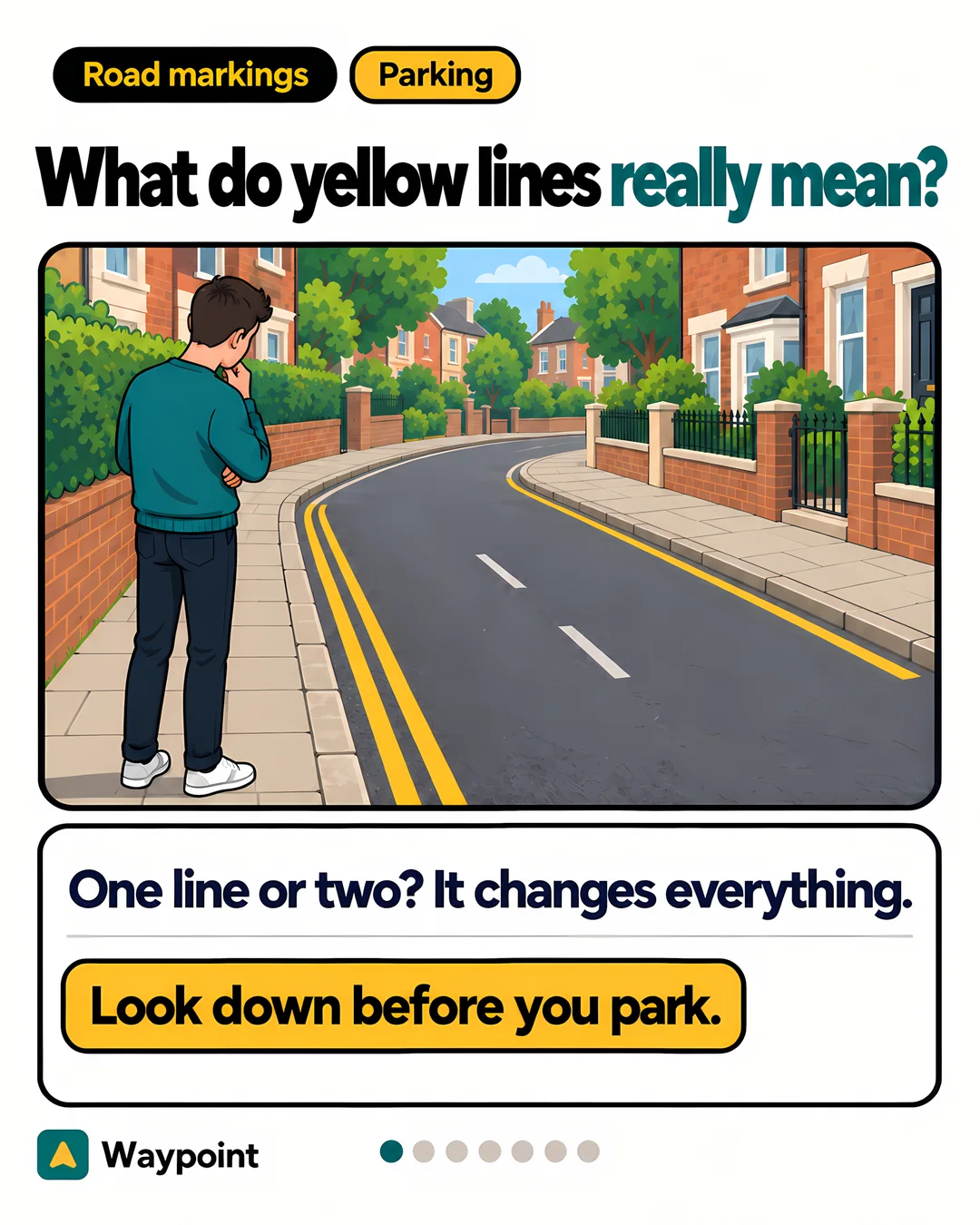
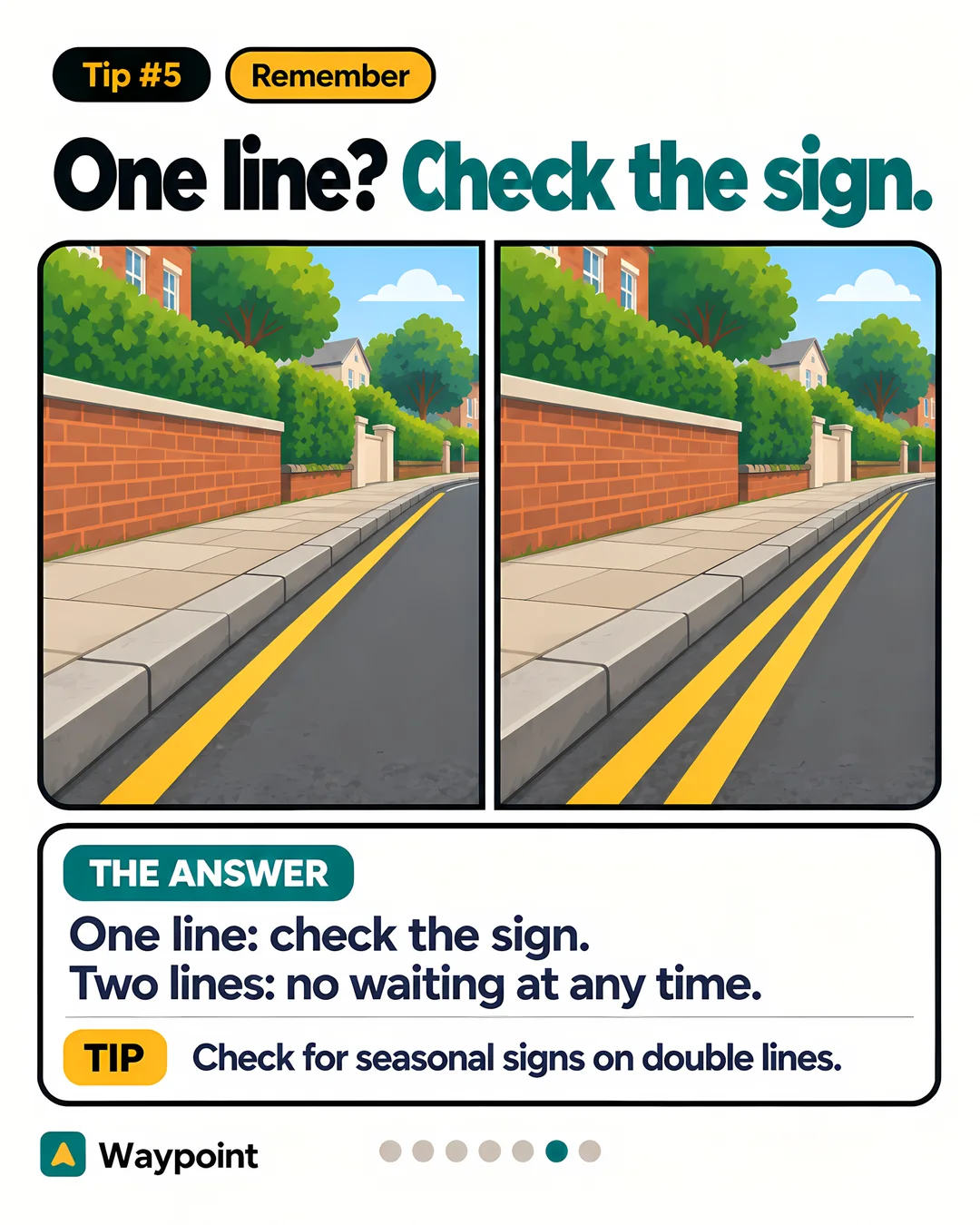
Yellow lines at the edge of the road are waiting restrictions. The Highway Code (Rule 238) says you must not wait or park on them during the times shown on nearby time plates, and that double yellow lines mean no waiting at any time, even where there are no upright signs. Whether it's one line or two changes everything.
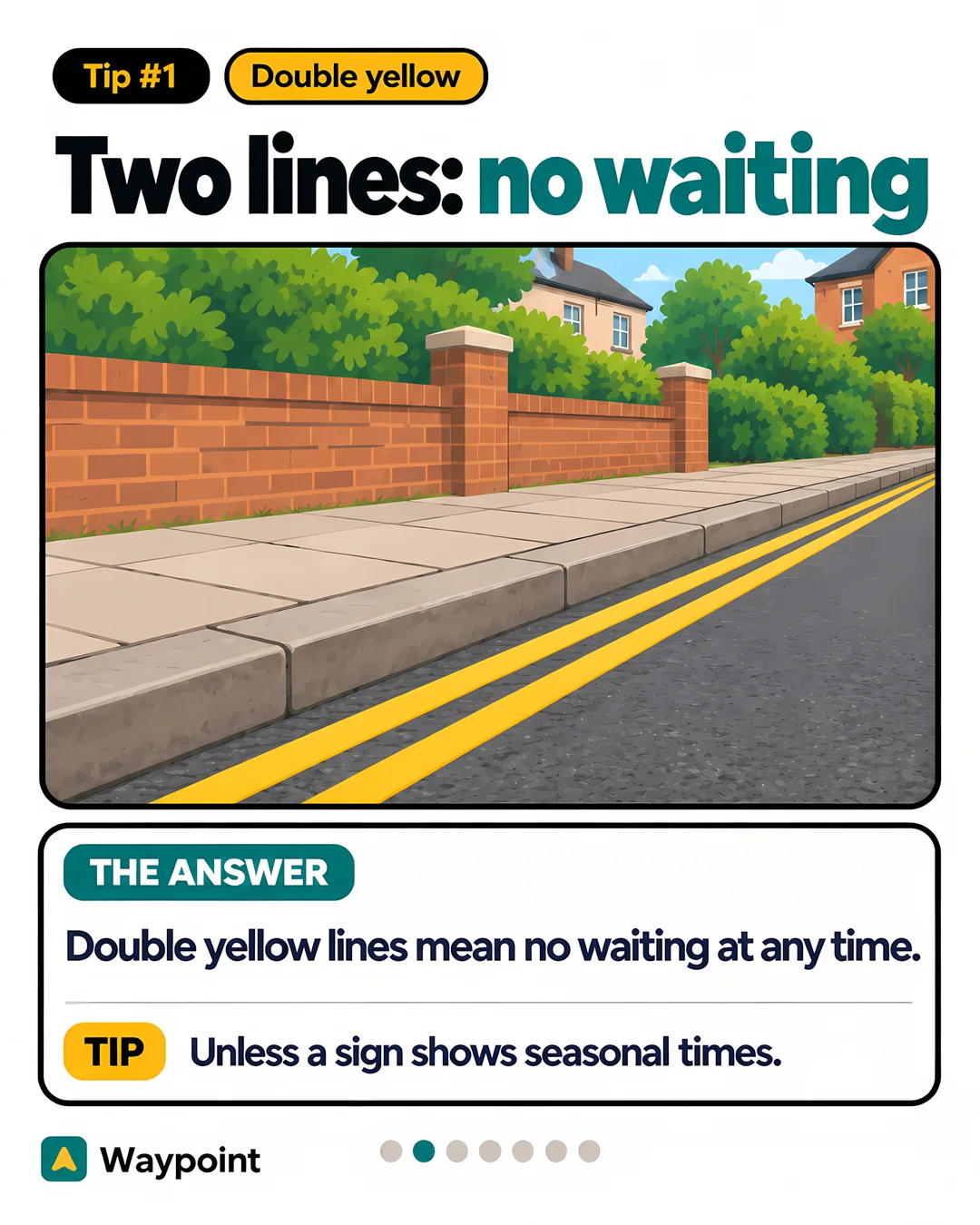
1. Two yellow lines: no waiting at any time
Double yellow lines mean you can't wait or park there at any time of day or night. The one exception is where a sign shows seasonal times: some seaside and holiday areas only apply the restriction in certain months, and the sign tells you which.
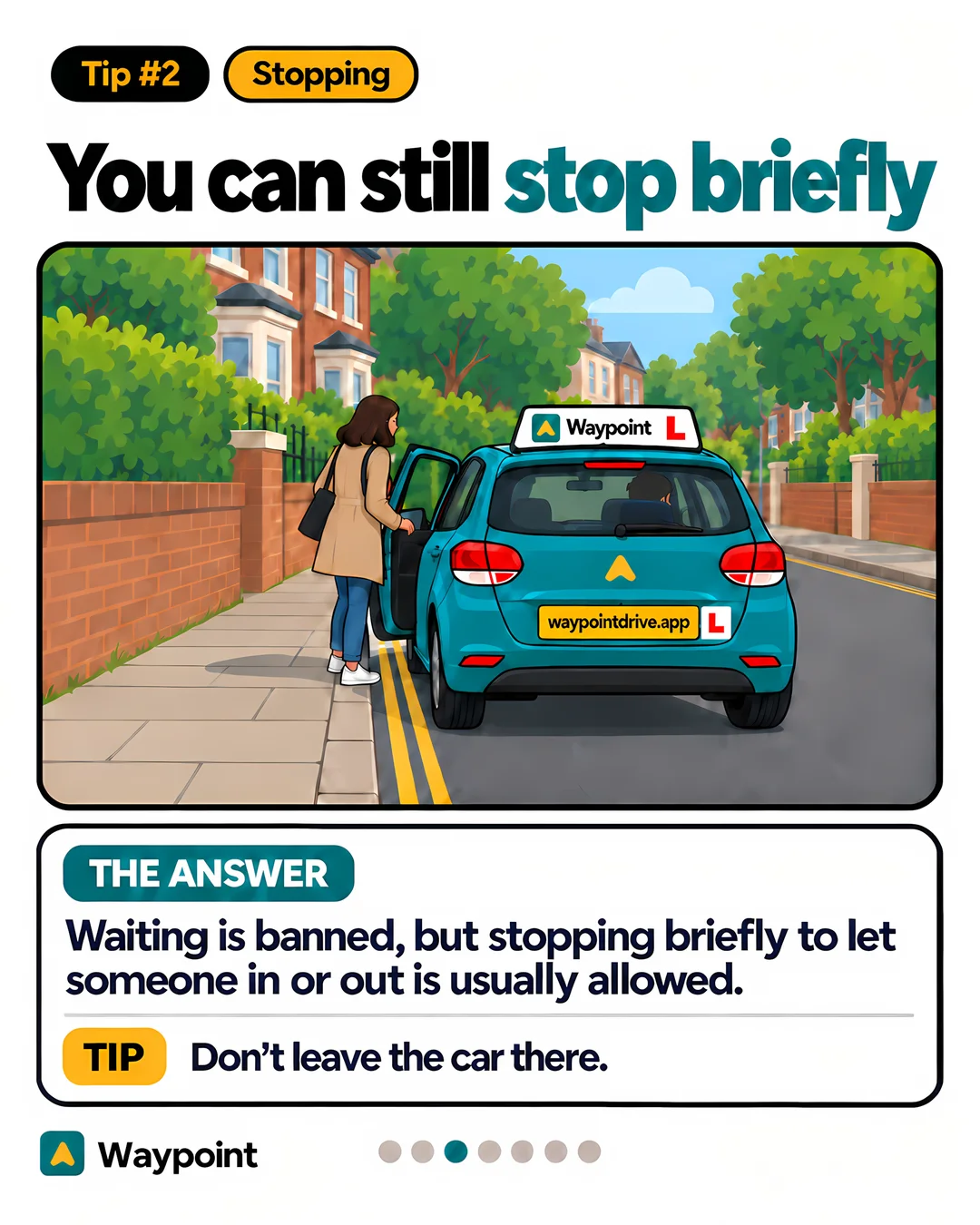
2. Waiting and stopping aren't the same thing
The rule is about waiting and parking. Pulling over for a moment to let someone in or out isn't the same as leaving the car there, and it's usually fine on yellow lines. Don't leave the car, don't hang around, and check there isn't a sign or kerb mark that says otherwise. Where the road also has loading or stopping restrictions, those apply on top.
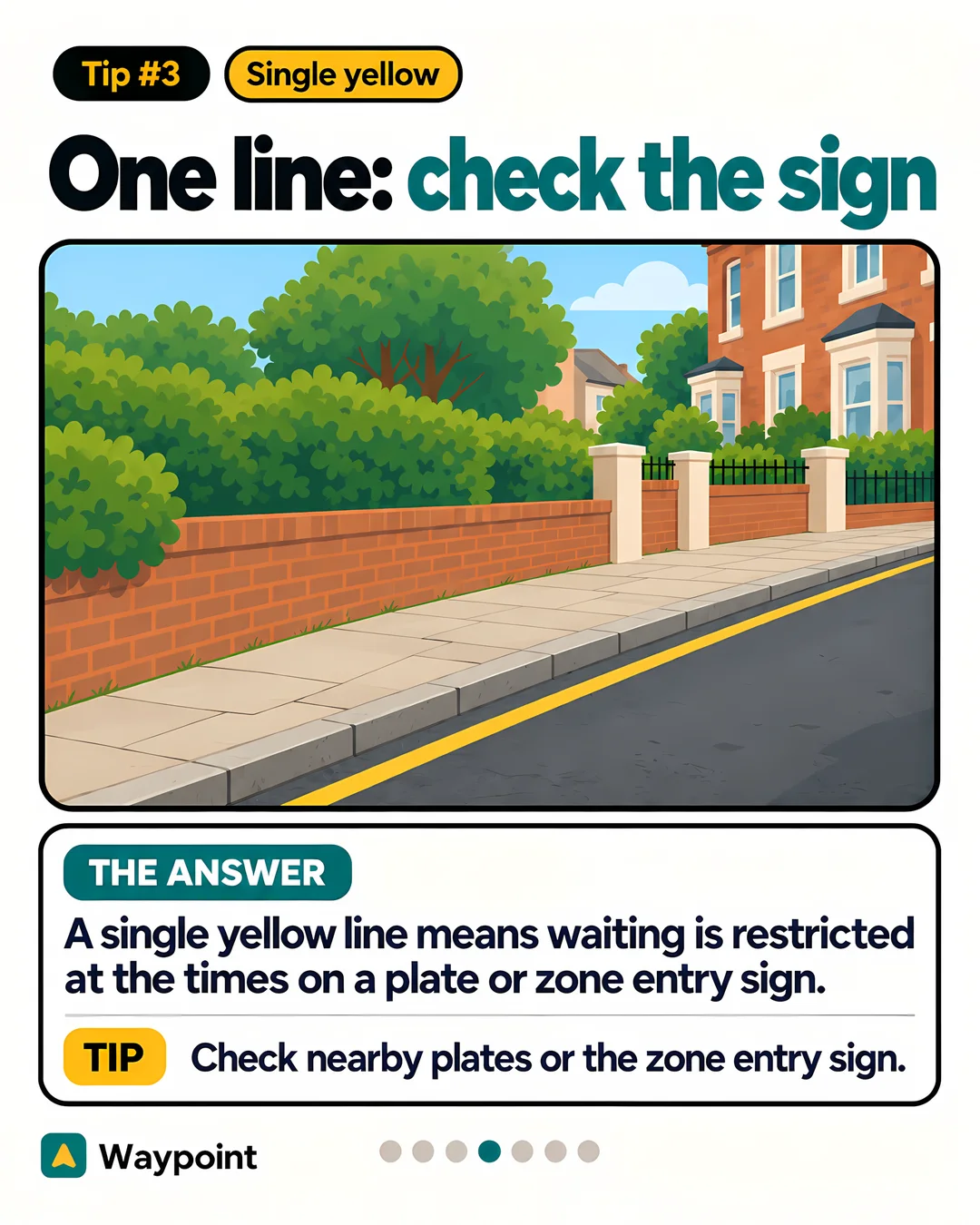
3. One yellow line: check the sign
A single yellow line means waiting is restricted at certain times, and the times are on a nearby plate or on the sign at the entrance to a controlled zone. Outside those times you can usually wait. Read the whole plate before you walk away, because the days and hours differ from street to street.
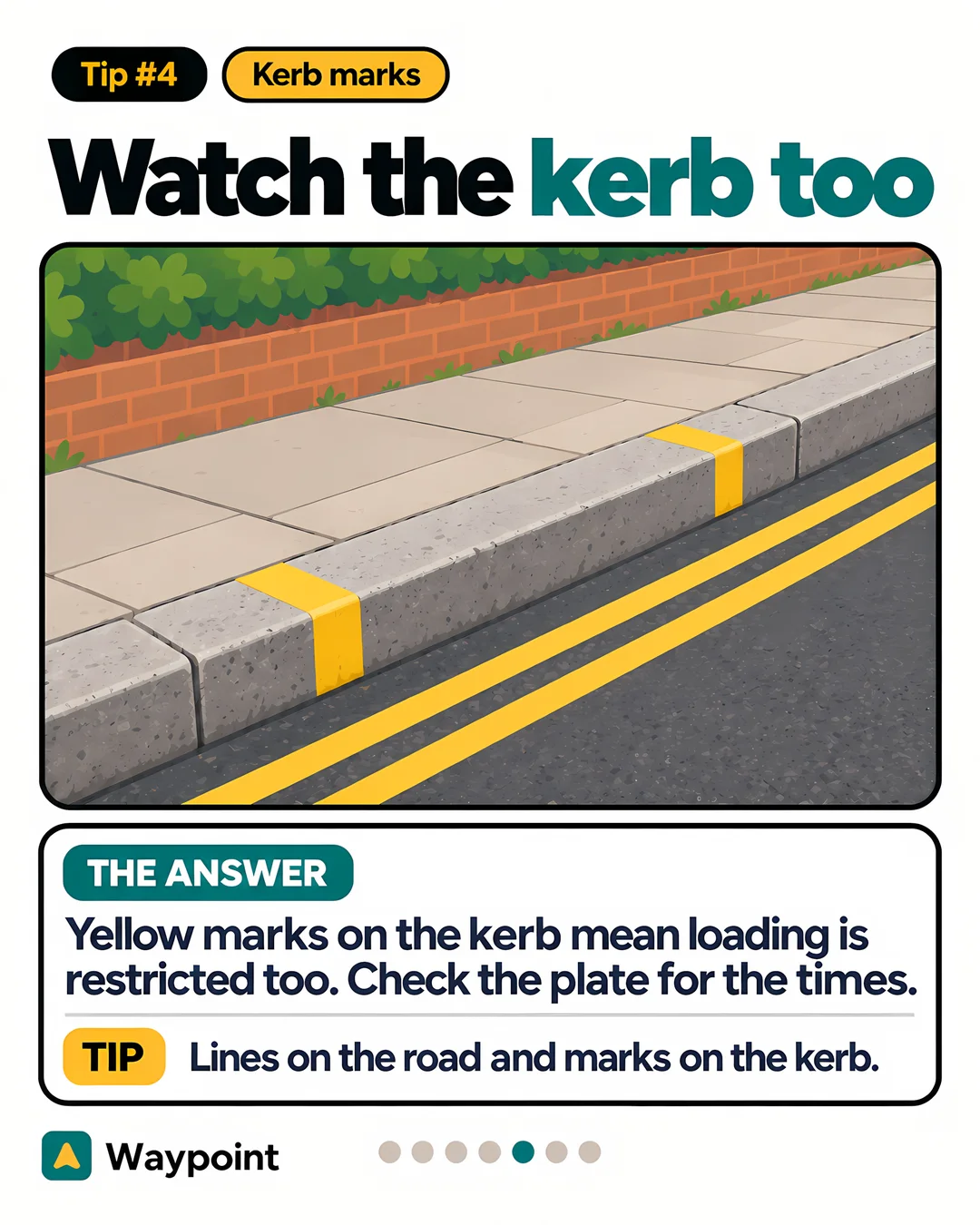
4. Watch the kerb too
Short yellow marks across the kerb are about loading and unloading. The Highway Code says not to load or unload where there are yellow markings on the kerb and upright signs advise that restrictions are in place, so check the plate for the times. A road can have yellow lines and kerb marks together, and each one tells you something different.
5. The quick way to remember it
One line: check the sign. Two lines: no waiting at any time, unless a seasonal sign says otherwise.
Does this come up in the theory test?
Road markings and parking rules are part of the theory test, and the answers come from the Highway Code and Know your traffic signs. If a question shows a yellow line, ask yourself two things: how many lines are there, and is there a sign with times on it?
How does Waypoint help you revise?
Waypoint asks you a few theory questions when you open an app you've chosen to block, like TikTok or Instagram. Answer them and you're back in, so a little revision happens every time you reach for your phone.
It has all 758 DVSA revision questions across 14 topics, used under licence, and the questions you get wrong come back until you've cleared them. Get Waypoint and start with a 3-day trial.